Jordan Vineyard & Winery: producer profile
Much has changed at this Alexander Valley winery in the past five years – yet the style of its Sonoma County Chardonnay and Cabernet has remained. Jonathan Cristaldi pays Jordan a visit to find out about new winemakers and vineyards and tastes mini verticals of the wines.
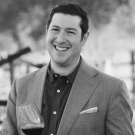

I last set foot at Jordan Vineyard & Winery in Sonoma’s Alexander Valley nearly five years ago. That was before the retirement of 43-year veteran winemaker Rob Davis in 2019 which preceded a host of renovations to the winery’s tasting rooms, exterior gardens and private suites.
Scroll down to see tasting notes and scores for 10 Jordan wines
Indeed, everything was new to me when I dropped by recently, including head winemaker Maggie Kruse. Yet the house style that Davis had perfected has remained all but unchanged. Arguably even better.
Let’s backtrack a bit. The 2016 harvest (and my last visit) marked Jordan’s 40th anniversary of producing Chardonnay. The first Jordan Chardonnay was bottled in 1979, made with grapes from the original Alexander Valley estate vineyard.
In this post:
- Jordan Vineyard & Winery: the story to date
- Jordan Vineyards & Winery: at a glance
However, by the late 1990s, Davis found himself smitten with the Russian River Chardonnay from J Vineyards. (Though now owned by Gallo, J Vineyards was founded by Judy Jordan, the older sister of John, who today runs Jordan Vineyard & Winery.)
So Davis began sourcing Chardonnay from Russian River. He then went even further, working to evolve the Jordan house style by dialing back the malolactic fermentation to less than 40%. By 2015, he’d stopped using American oak and was ageing the wine entirely in French oak.
Today, Jordan Chardonnay is sourced from top Sonoma growers like Martinelli and Two Brothers in Sebastopol and from Bialla Vineyard on River Road.
The current release, the 2019, is Kruse’s first Chardonnay as head winemaker, even though she had worked for Jordan since 2010. Building on Davis’ momentum, she plans to age some of the Chardonnay for future releases in a concrete egg.

First new vineyard in 47 years
In May 2021, exactly 47 years after his family first purchased land in the Alexander Valley, John Jordan inked a deal to secure the 16ha Meola Vineyard just north of the town of Geyserville, which abuts the Russian River.
The site, planted entirely to Cabernet Sauvignon on gravelly loam, is across the street from the J Rickards Winery, and adjacent to Home Ranch, which is owned by Seghesio Family Vineyards.
By the end of the decade, the winery hopes to include 50% to 60% of estate fruit into its Sonoma Cabernet (it has fallen from 70% estate fruit in 2006 to less than 20% today).
Kruse believes the Meola fruit gives balanced tannins that will continue the Jordan house style. Both she and Brent Young, director of agricultural operations, are plotting a replant of Meola, though she admits it will be a number of years before that fruit makes it into a Jordan wine.
Jordan Vineyard & Winery: the story to date
In 2020, Elin McCoy visited Jordan for Decanter. Her profile on the estate follows.
As I followed the long driveway through rolling hills to the grand, ivy-covered château-like Jordan Vineyard & Winery in Sonoma’s Alexander Valley, I kept thinking of its beginnings more than four decades ago.
When it opened in 1979, it was a glamorous architectural statement promising a new era for Sonoma wine country. The opulent dining spaces in the huge mustard-yellow stucco French-inspired building just north of Healdsburg signalled the project had serious food and wine ambitions. Few were surprised that the goal of owners Tom and Sally Jordan was a California Cabernet Sauvignon to rival first growth Bordeaux.
Click here for Elin’s scores and tasting notes for 15 Chardonnays and Cabernets back to 1980
Their first vintage, 1976, was greeted with appropriate fanfare when it was released in 1980. It was a wine of silk and polish, with complex plummy flavours and a smooth balance that contrasted with the era’s more rustic, tannic examples.
For four decades, the Jordans’ vision of producing one Cabernet Sauvignon made in a balanced, drinkable style, plus one Chardonnay, never wavered, even as other wineries embraced bigger, riper wines to garner high scores.
Yet in the mid-1990s and early 2000s, the winery lost its early buzz, and I wanted to know how John Jordan, Sally and Tom’s son, brought it back and sees its future. In the 21st century, Jordan has become a complete wine estate, with an apiary, chef’s garden, olive grove, two lakes, and cows grazing on grassy pastures.
The Cabernet, and to a slightly lesser extent the Chardonnay, are restaurant favourites, regularly polling in the top ten because they’re very good, elegant, and consistent, though not dazzling – a serious achievement considering Jordan makes 100,000 cases a year. The Cabernet especially delivers delicious drinkability at a reasonable price, which is something to celebrate. If I had to pick a Bordeaux appellation the Cabernet echoes, I’d say St-Julien, and every time I taste old vintages, as I have several times in the past ten years, I’m surprised all over again at how well these Cabernets age.
A pioneer in Sonoma
Like many California wineries from the 1970s, Jordan began with a long-held dream. Denver oil and gas executive Tom Jordan and his wife Sally were Francophiles and Bordeaux was their drink. They fell in love with its classic style and structure and the way the French entertained. Becoming vintners was part of their plan, but doing it in far away France seemed impossible.
Their California ‘aha’ moment was a taste of Beaulieu Vineyards Georges de Latour Private Reserve Cabernet Sauvignon from Napa Valley at a San Francisco restaurant, in 1971. Soon they were hunting for a property in northern California where they could make an American version of Bordeaux.
It’s hard to picture what Sonoma was like back then. Sally Jordan called it ‘a gastronomic wasteland’ with only a handful of wineries. The Jordan winery helped to put the valley, which became an AVA in 1984, on the wine map.
The couple signed a contract on 112 hectares in Alexander Valley in 1972, the day their son John was born, then pulled out the prune orchard to plant Cabernet and Merlot. Though the giant parcel they wanted for a winery site wasn’t for sale, they heard its owners were searching for an Oregon fly-fishing property, so the Jordans bought one, and swapped for the acres they wanted.
The biggest influence on the wines, though, was Andre Tchelistcheff, legendary winemaker at Beaulieu Vineyards. Sally pleaded with him to sign on as their consultant as he chain-smoked over lunch. ‘We’ll spend whatever it takes,’ she said. ‘You can pick the winemaker.’
So Tchelistcheff plucked Rob Davis straight out of University of California at Davis and took him to Europe to taste the first growths. Davis stayed at Jordan for 43 years. The estate thrived, and its sophisticated hospitality was clearly a key part of its marketing success. At one time it was home to 36 peacocks, fed on rum cake made in Healdsburg!
The evolution of a house style
Early vintages of Jordan’s Cabernet Sauvignon-Merlot blends were aged in French and American oak, typical for the era and an homage to Tchelistcheff, whose BV Private Reserve was aged in American oak. The style married the freshness of Bordeaux with the character of Alexander Valley: medium bodied, with curranty fruit and notes of tobacco and dried herbs.
Still sleepy and agricultural today, the valley is a warm inland appellation with rocky, well drained soils ideal for Cabernet. Jordan’s top wine, the Cabernet’s approachability comes from two years’ ageing in bottle before release.
The Chardonnay was originally made from estate fruit but slowly graduated to using Russian River fruit, although it took Davis 10 years to convince Tom Jordan to let him use all Russian River fruit – the 2000 vintage being the first to be labeled under the Russian River Valley AVA. Today, it’s crisper, more citrussy and elegant than it was back then, but still doesn’t quite live up to Jordan’s French archetypes: Meursault and Puligny-Montrachet.
In the mid-1990s, when phylloxera devastated the estate vineyards and forced Davis to purchase grapes, it was a blessing. He found the intense fruit from bench land and hillside vineyards superior to that from Jordan’s valley floor vineyards, which eventually led to new plantings on hillsides behind the winery.
After the Jordans divorced in the 1990s, they left the winery in the hands of the accountant. Quality suffered, the winery coasted on its reputation, and there were conflicts over buying fruit.
Bringing Jordan Winery back
Enter John Jordan, Sally and Tom’s son, in 2005. A lawyer with an MBA, he flies his own plane, co-founded a technology company, is a guest analyst on international television, and speaks Russian and German. When he stepped in to manage the estate at age 33, there was a lot to do. Making great wine in the 21st century, Jordan admits, is very different from the 1970s and 1980s.

When he asked Davis if there was anything he wanted to do to improve the wines, the winemaker handed him a long list: number one was buying grapes grown in better terroir, and number two was using more expensive French oak barrels.
‘John said, “go for it”,’ Davis recalls. He set about obtaining the very best fruit from top growers, and planted more Petit Verdot.
In blind tastings, Davis had found that the wines from better terroirs that were aged in French oak stood out as far superior. ‘It spotlights Alexander Valley’s dark, pristine fruit,’ he explains. The percentage of French oak for the Cabernet started going up, and with the 2015 vintage, it reached 100%.
Quality rose higher and higher as Davis tweaked aspects of his work. He began macerating the grapes for a shorter period of time, introduced new soil mapping technology for precision viticulture, started the process of replanting all the estate vineyards, and trained his successor, Maggie Kruse, who took over in 2019 after nine years at Jordan.
What’s next?
John Jordan isn’t looking to be bigger. Instead he’s continuing to increase quality and is investing big time in sustainability. Solar-powered since 2012, the winery is now certified carbon neutral.
The winery’s style of classic, balanced wines below 14% alcohol is back in vogue, and the wines are better than ever. But in a world obsessed with the new, natural, expensive and obscure, they still don’t get the critics’ buzz they once did.
For the future, John Jordan sees hospitality as ‘a core focus for us. It’s the fun part of the business.’ Early on he recognised the importance of a holistic strategy to bond drinkers to a medium-sized winery and its wines. The website blog and award-winning (sometimes humorous) videos share inside information but also offer general wine and entertaining wisdom.
He’s also fine-tuning intimate visitor experiences at the winery, which include vineyard hikes, elegant food and wine tastings in the dining room, stays in the château, the annual Halloween party – all to ‘pay homage today to a bygone civilised form of life’…exactly what his parents envisioned 44 years ago.
Timeline
1972 Tom and Sally Jordan create Jordan winery, buying 112 hectares in Alexander Valley.
1974 The Jordans hire famed winemaker Andre Tchelistcheff as a consultant and purchase another 485 hectares.
1976 The first vintage of Jordan Cabernet is made, and the winery hires Rob Davis as winemaker.
1979 The first vintage of Jordan Chardonnay is harvested, from grapes planted in 1977.
1980 The first vintage of Jordan Cabernet is released.
1990 Rob Davis begins sourcing Chardonnay from Russian River Valley vineyards.
1999 The first harvest of Cabernet Sauvignon, Merlot, Cabernet Franc, and Petit Verdot from hillside slopes.
2000 The Chardonnay officially changes to a Russian River appellation; the winery vastly expands Petit Verdot plantings.
2005 John Jordan, Tom and Sally’s son, becomes CEO of the winery.
2012 The winery goes solar powered; the Jordans sell the original vineyard to a Native American tribe.
2015 Jordan transitions to using exclusively French barrels for the Cabernet Sauvignon.
2019 Rob Davis retires; Maggie Kruse becomes new winemaker.
Jordan Vineyards & Winery at a glance:
Founders: Tom and Sally Jordan
Founded: 1972
CEO: John Jordan
Location: Alexander Valley, Sonoma County
Total hectares: 526 hectares
Estate vineyard: 112 hectares
Grapes grown: Cabernet Sauvignon, Merlot, Cabernet Franc, Petit Verdot
Other vineyard sources: Chardonnay, Russian River Valley since 2000
Wines: Cabernet Sauvignon, Chardonnay
Winemaker: Maggie Kruse (Rob Davis, winemaker for 43 years, retired in 2019)
Annual production: 100,000 cases, 70,000 Cabernet, 30,000 Chardonnay
Jonathan Cristaldi tastes 10 Jordan wines:
Wines are shown by colour and vintage, in descending order.
Related content
North American trendsetters: five modern-day pioneers
Healdsburg travel guide: three-day itinerary for wine lovers
Jordan Vineyard & Winery, Chardonnay, Sonoma County, Russian River Valley, California, USA, 2019
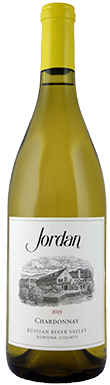

Maggie Kruse worked for Jordan for nine years before taking over in 2019 from Rob Davis, who retired after 43 years. This current-release Chardonnay is her first as head winemaker. Late spring rains led to an abundant crop and a lot of fruit was dropped. Aromatic citrus and tropical fruit aromas mingle with orange blossom and wildflower honey. There are vivid flavours of lemon, ginger, pineapple and pear, with a surprisingly silken, creamy texture and a nutty finish.
2019
Jordan Vineyard & WinerySonoma County

Jordan Vineyard & Winery, Chardonnay, Sonoma County, Russian River Valley, California, USA, 2018
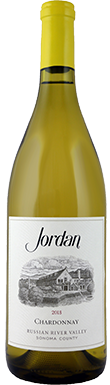
Winemaker Rob Davis says the 2018 vintage provided optimal growing conditions, where the late harvest, from 18 September to 14 October, did not lead to overripe flavours as one might have expected. Aged in 100% French oak, this Chardonnay is all class, with elegant white florals, crisp orchard fruit and citrus aromas. The palate is lean and compact, with succulent pear, green apple and lemon, laced with savoury baking spices and a long, mineral finish punctuated by new-wood cedar notes.
2018
Jordan Vineyard & WinerySonoma County
Jordan Vineyard & Winery, Chardonnay, Sonoma County, Russian River Valley, California, USA, 2016
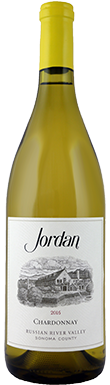
The winery's 40th anniversary bottling and winemaker Rob Davis’ second vintage of ageing the Chardonnay in 100% new French oak – a huge departure after 36 Chardonnay harvests of ageing in both French and American oak. Grapes were double-sorted and treated to six weeks of sur-lie ageing and weekly batonnage. A rush of savoury baking spices, sweet cedar and fresh lemon tinged with pine forest accents on the nose. It is round and rich, with layers of quince, citrus, candied ginger and a chalky mineral-tinged mid-palate leading to a marzipan finish. An excellent showing from a terrific vintage.
2016
Jordan Vineyard & WinerySonoma County
Jordan Vineyard & Winery, Chardonnay, Sonoma County, Russian River Valley, California, USA, 2010
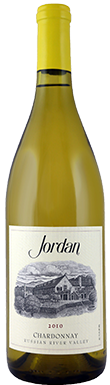
From one of the coolest growing seasons in the Russian River Valley in the past two decades, harvest didn't begin until 20 September, three weeks later than typical. It spent two months on lees with five weeks of batonnage, then five months in 47% new French oak. Salty-fresh aromas of lemon, jasmine, honeydew and a pop of vanilla and pine lead to a palate of yellow apple, quince, overripe pear and toasted almond notes. A remarkably lean Chardonnay, still tightly wound, with the zesty acidity of the cooler vintage.
2010
Jordan Vineyard & WinerySonoma County
Jordan Vineyard & Winery, Chardonnay, Sonoma County, Russian River Valley, California, USA, 2008
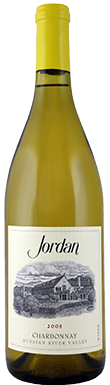
Winemaker Rob Davis harvested grapes from 29 August to 25 September 25 in 2008 – an even-keeled growing season with a smaller than usual crop of tiny berry clusters. The wine was then aged in French oak (55% new) for about five months. Tasted at 13 years of age, it’s holding on beautifully. A deep golden colour gives way to a mineral-rich nose of salted lemon peel, melon and lemon zest with caramel buttercream notes. The palate is more restrained than expected, with more of that salty-sweet caramelised citrus that comes with age, but it is far from weary. The acidity is still refreshing and zippy through the toasty, nutty finish.
2008
Jordan Vineyard & WinerySonoma County
Jordan Vineyard & Winery, Cabernet Sauvignon, Sonoma County, Alexander Valley, California, USA, 2018
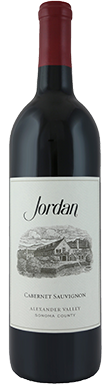
Due for release in 2022, this is winemaker Rob Davis’s curtain call after 43 years at Jordan. And what a vintage to go out on – one of the finest in northern California in the past 30 years. Leading with 80% Cabernet Sauvignon and aged in one-third new French oak, it shows cinnamon-dusted cherry and blackberry, redcurrants, tobacco leaf find elegant cedar flourishes. The palate teems with energy and drive, where tight-knit, fine-grained tannins support a deeply juicy core of concentrated black fruit underscored by crushed-stone minerality, through the long, savoury, spiced finish. Bravo!
2018
Jordan Vineyard & WinerySonoma County
Jordan Vineyard & Winery, Cabernet Sauvignon, Sonoma County, Alexander Valley, California, USA, 2009
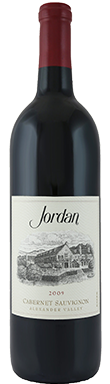
A dramatic shift in fruit sources: just 22% estate fruit and 78% purchased fruit from southern Alexander Valley, in sites east of Geyserville among mostly benchland and hillsides in the Russian River Valley. Winemaker Rob Davis made the most of the cool season, which saw some rain during harvest, and describes the more than 60 lots blended to produce this wine as some of their best ever. Dusty cherry, redcurrant, dried lilac and rose aromas, then a juicy palate with brisk acidity and almost imperceptible tannins, with more redcurrant flavours layered with blackberry, boysenberry and tobacco. An earthy finish offers pops of white pepper and dried florals. A sheer joy to drink.
2009
Jordan Vineyard & WinerySonoma County
Jordan Vineyard & Winery, Cabernet Sauvignon, Sonoma County, Alexander Valley, California, USA, 2017
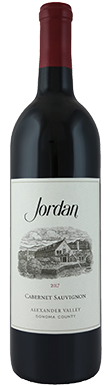
Longtime winemaker Rob Davis' masterful balancing act scuppered Mother Nature in a vintage that delivered at least five major heat spikes, along with late-season fires. Luckily for Jordan, harvest was wrapped up by 6 October, well before the fires struck. The wine is impressively fresh, with ripe blackberry, lofty purple florals and sweet cedar aromas courtesy of ageing in 100% French oak. Fine-grained yet grippy tannins coat the full-bodied palate, packed with unctuous layers of blue and black fruits, tobacco, violets and graphite through a cocoa-dusted finish. A real standout from a challenging vintage.
2017
Jordan Vineyard & WinerySonoma County
Jordan Vineyard & Winery, Cabernet Sauvignon, Sonoma County, Alexander Valley, California, USA, 2010
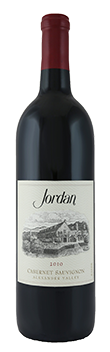
Here, 81% of the blend was purchased fruit (76% Cabernet Sauvignon, 16% Merlot, 7% Petit Verdot, and 1% Malbec). Springtime rains allowed for rich canopy growth, which protected the grapes from the heat. Rich blackberry fruit aromas join spiced plum, blackcurrants and green tobacco. Loads of richly textured, sweet berry fruit flavours show the warmth of the vintage and the 12 months' ageing in mainly French (74%) and American oak gives a sumptuous finish of tobacco, vanilla, sweet earth and dark chocolate.
2010
Jordan Vineyard & WinerySonoma County
Jordan Vineyard & Winery, Cabernet Sauvignon, Sonoma County, Alexander Valley, California, USA, 2006
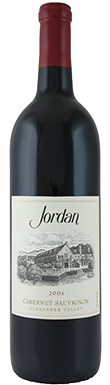
Using 70% estate fruit and 30% purchased grapes, this wine was aged 12 months in two-thirds French and one-third American oak. Opened for about 45 minutes at the winery prior to tasting, it showed lifted aromas of redcurrants and rich potting soil. On the palate the sweet red berry fruit is still hanging on, laced with tobacco and rich forest floor notes. The tannins are nicely resolved and the savoury finish offers a mix of cured meats, black pepper and tobacco leaf. This wine has aged gracefully and is in its peak drinking moment now.
2006
Jordan Vineyard & WinerySonoma County
