Luczy: a chat with Bill Harlan – and six wines back to 1992
Bill Harlan was a man with a 200-year plan when he set out his vision for creating a Bordeaux first-growth equivalent in Napa more than four decades ago. Matthew Luczy catches up with this California wine visionary and tastes six vintages of the iconic Harlan Estate.

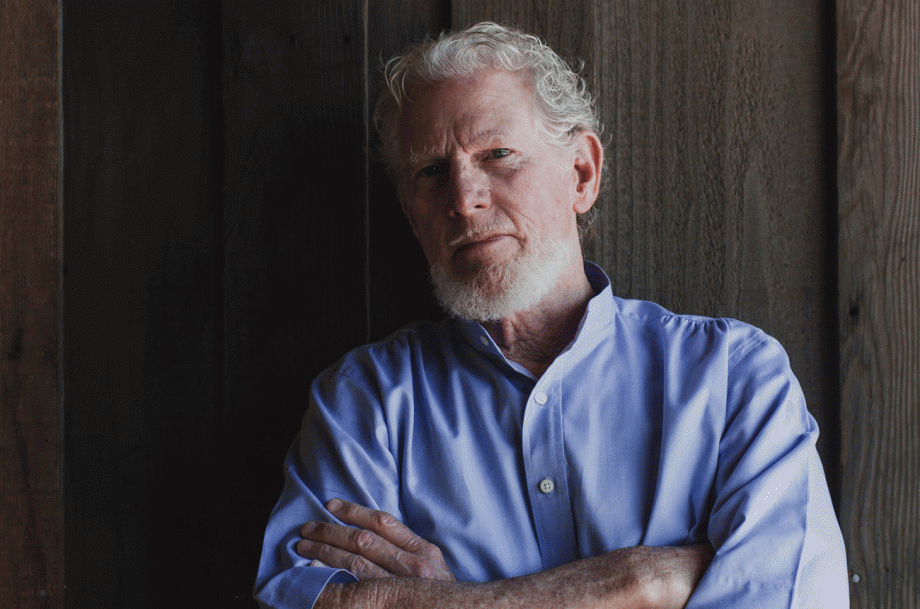
At what point in your career can you rightfully be called a visionary? And how many slots are still open for such a title in already-established wine regions? Setting goals that arch out over hundreds of years is a lofty endeavour, with countless opportunities to falter or go off course.
Anyone looking to witness even a sliver of a similar trajectory must have a will, drive and vision that is insatiable, unstoppable – and well-funded. One figure that has checked all the necessary boxes to set such a plan in motion is Bill Harlan.
Scroll down for Matthew Luczy’s tasting notes of six vintages of Harlan, back to 1992
Harlan’s saga with the Napa Valley snowballed from day trip to the region while in college at Berkeley. ‘In the 1950s, you could go wine tasting for free and they didn’t check your ID. It was pretty great for college students!’ Harlan recounts when we caught up recently.
‘My background had been in real estate, and from that I learned that you do well by getting in early and buying the best land. I might have been a little bit late in Napa, but not as late as those that were coming next.’
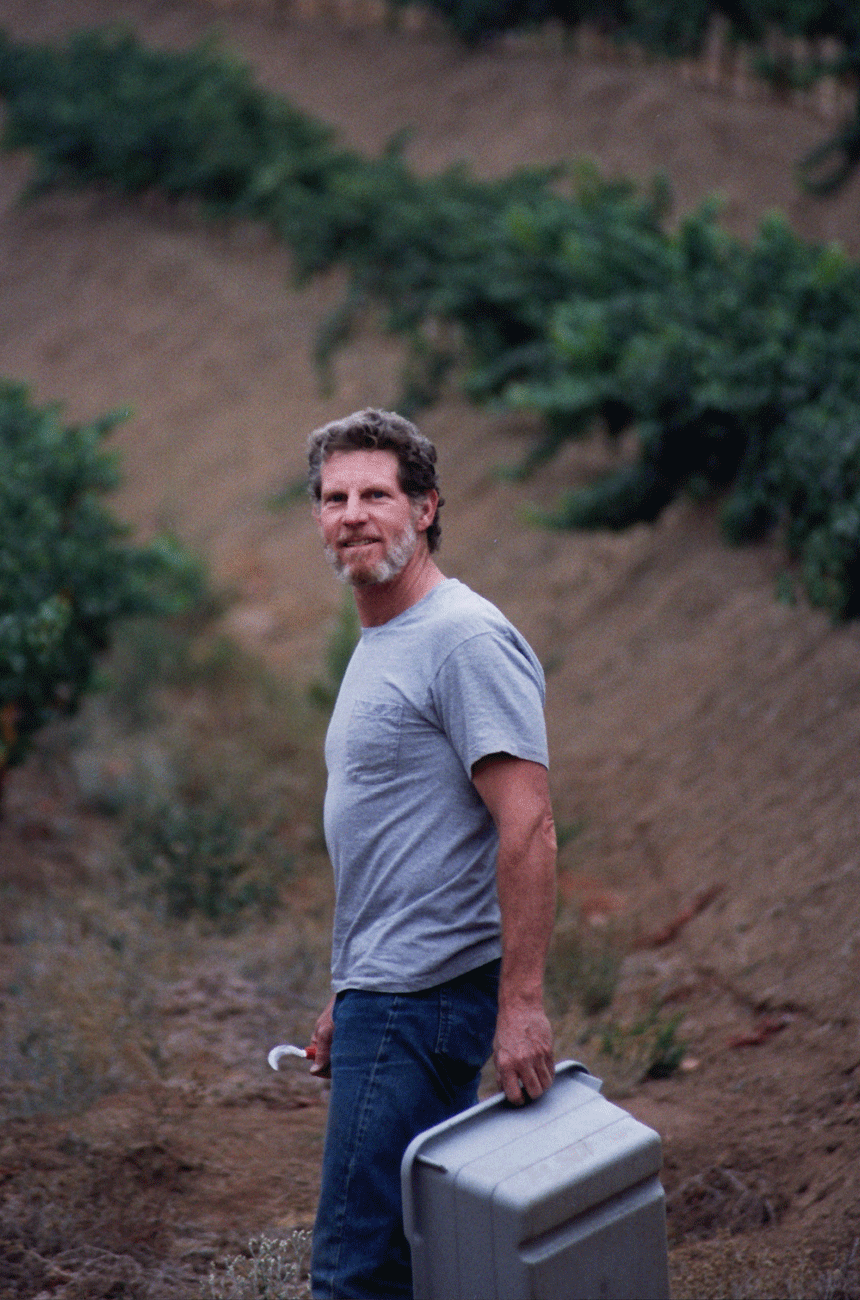
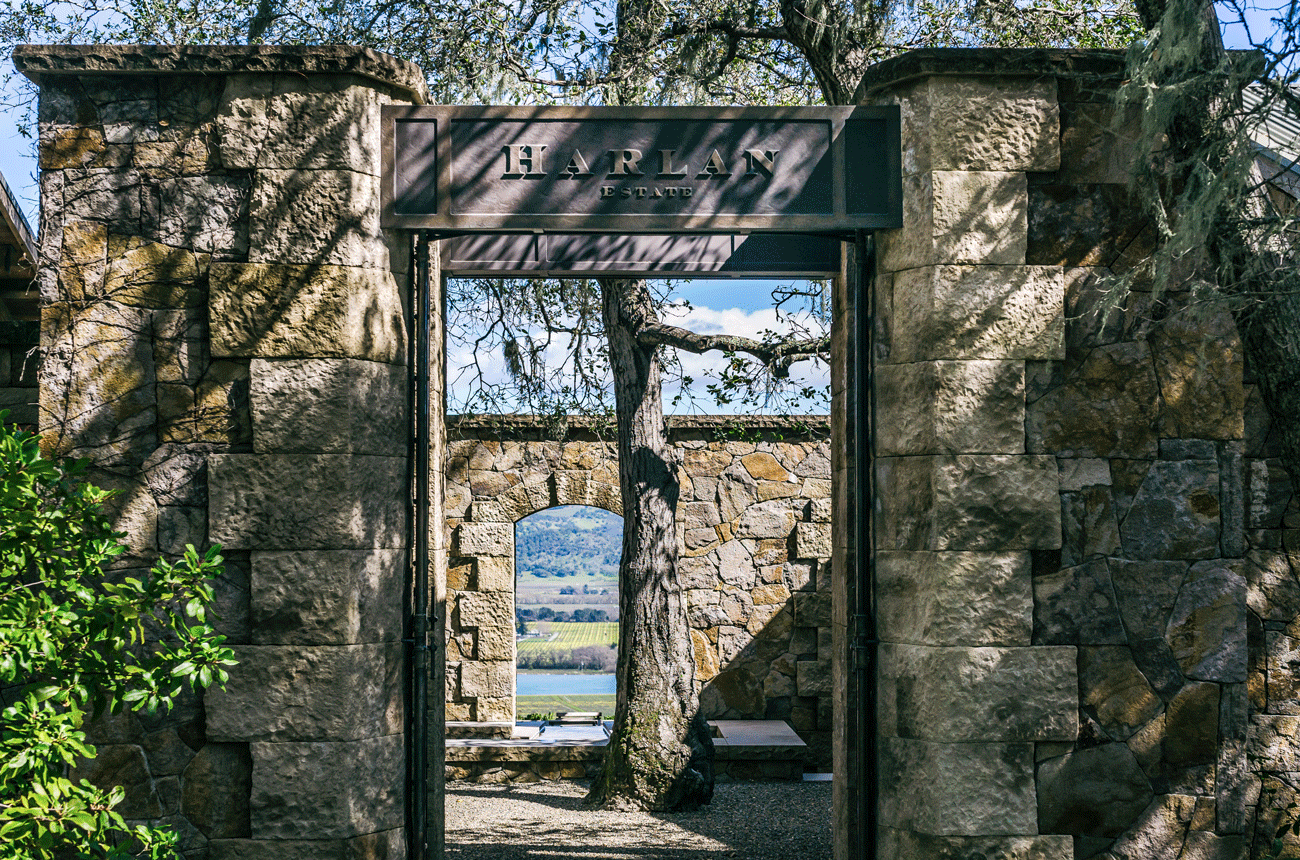
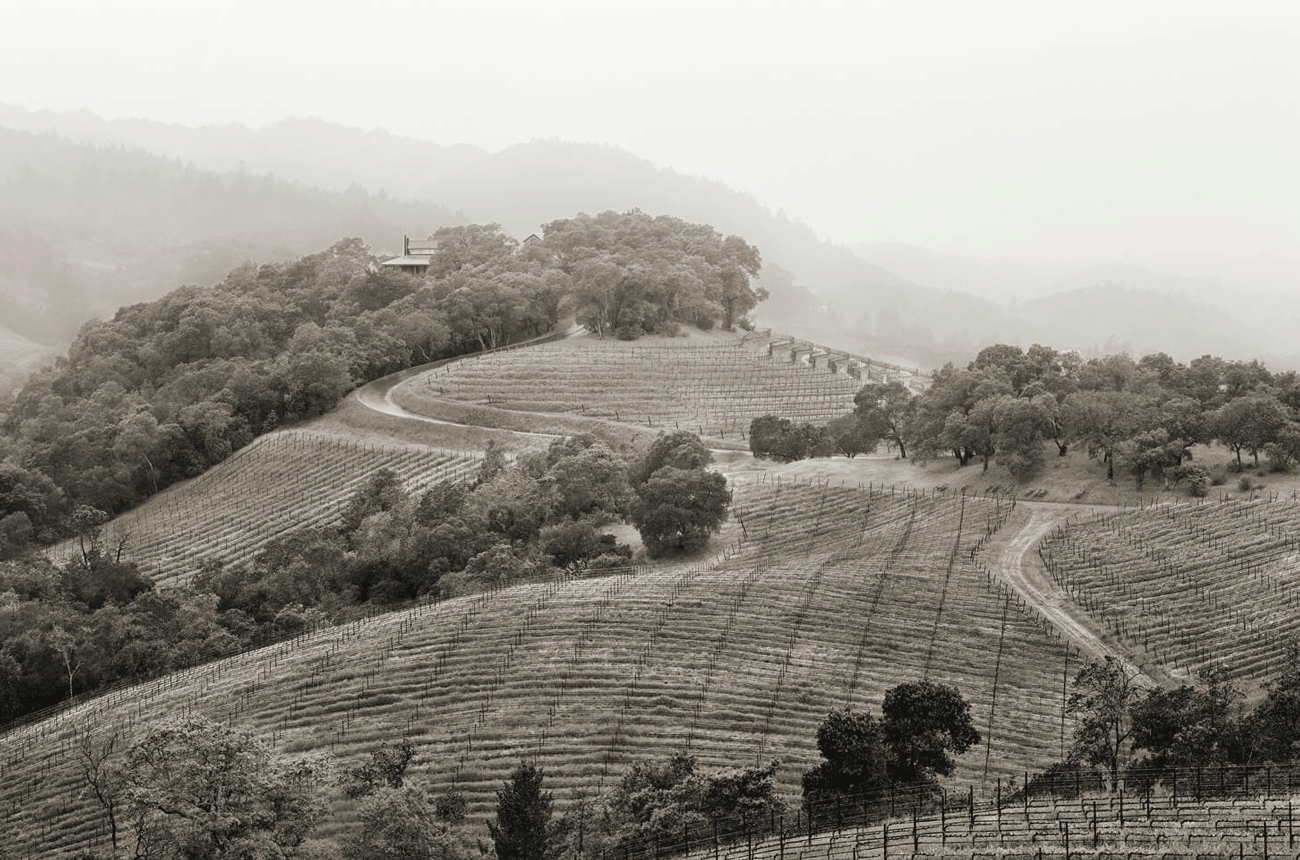
Harlan’s ‘200-year plan’ of creating a Bordeaux first-growth equivalent in California began with the purchase in 1984 of what was to become Harlan Estate, in Oakville.
This plan later expanded to the creation of the single-vineyard, Cabernet-focused Bond in 1996, and the acquisition of the rustic, expansive Promontory property in 2008.
Each project has a singular identity but dovetails into the next, using a model that is a unique French hybrid: the size, structure and style of Bordeaux, but the intense focus on vineyard specificity of Burgundy.
How the Harlan dream started
Early on, Harlan’s goal was to ‘buy a piece of land in Napa, plant a vineyard, find a wife, raise a family’. He adds: ‘I had plenty of other side dreams – like getting a boat and sailing around the world – but that’s how it all started.’
By 1979 he had ‘started to earn a living’ and acquired the first piece of what would become a far larger project – the property where the luxury Meadowood resort in St Helena now sits.
After a lunch with Robert Mondavi, the scope of Harlan’s dream expanded significantly. After hearing Harlan’s plan for the newly acquired land, Mondavi told him that Napa Valley ‘had much more potential than that’.
Harlan was convinced Meadowood should become a hub for the local community, rather than the spot for his dream vineyard. Inspired by the Hospices de Beaune, Meadowood eventually became home to Auction Napa Valley, as well as a lavish resort and a Michelin three-starred restaurant.
Napa’s 2020 Glass Fire torched Meadowood. The destruction came immediately after a lengthy remodel, eerily echoing a blaze that occurred just after its initial construction.
‘The clubhouse and restaurant burned down in 1984, within 30 days of us finishing it. This time, a lot more burned,’ says Harlan. ‘But it’s allowed us to rebuild and rethink what’s right for the next 40 years. If we didn’t have the fire, we wouldn’t have had this opportunity.
‘We designed Meadowood in 1982, when there were just 25 wineries in Napa. It’s still a challenge to figure out exactly what we want to do now, but it’s getting clearer. We’re working with the county to see if we can adjust some things – not necessarily add more square footage, but decide on something that’s better for us and the community.’
Adapting, surviving and flourishing
Harlan’s 50 years witnessing the wheel of fortune turn in the Napa Valley has helped him remain optimistic about its future. ‘There was a lot of change during Prohibition, when a lot of vineyards were ripped out. The next big change was when phylloxera hit in the 1980s, causing most vineyards to be replanted again. It helped the Napa Valley advance in quality – getting to understand the right varieties, rootstocks and row orientations to use. A huge amount of progress was made during a very short amount of time.
‘Napa is producing better wines today than 40, 20, or even 10 years ago,’ he asserts confidently. ‘Today, with the prevalence of fires and the impact of climate change, research and development from winemakers and universities will help us adapt. Also, weather forecasts are so much better today, that you can make earlier decisions. That anticipation helps greatly.’
When we discuss the bizarre events of 2020, Harlan’s business acumen and big-picture perspective provide clarity. ‘It reconfirms how important it is not to have debt,’ he says. ‘You don’t want to get over-leveraged in the wine business. When you’re dealing with the vagaries of Mother Nature, you need to be very conservative.
‘Since no one is travelling [because of the pandemic], it’s given us time to think about what we’re doing – things that we can only learn from stepping back and considering how all this affects the future. We need to adapt and survive this moment, but also think about the long run from a broader perspective.’
Inspiration – and luck
My interview with Harlan coincided with the loss of another massively influential figure in the wine world, Steven Spurrier. ‘He was a great human being and made a big, big difference in the Napa Valley,’ Harlan says fondly.
‘At the time, the article [George M Taber’s piece in Time about the 1976 Judgement of Paris] seemed like a bit of a tempest in a teapot, but it turned out to be something that truly made a difference. It gave me the inspiration and urgency to get on with the plan.’
Bill Harlan, now 80, is one of few modern wine figures who has truly put a plan in motion that can transcend the ages. He is also the first to admit that even with a worldly perspective, careful planning and the help of renowned experts, there is no denying the influence of luck.
‘From the time we planted our first vineyards to selling our first bottle of wine, it was 12 years,’ he reveals. ‘I didn’t want to release anything until I felt we had a chance to be in the company of the world’s finest wines.
‘I also thought it would also be nice to have a few backup vintages to prove that we didn’t just get lucky one time. But a big part of it is luck. We can do the best we can, but you need luck on your side. I really believe that.’
Two wines to treasure: Bill Harlan
La Mission Haut-Brion 1953 ‘It was a dream – maybe beyond any other wine I’ve ever had.’
Harlan Estate 1990 (magnum) ‘It was a wonderful experience. I thought, “We’re on the right track.”’ It only took 30 years – and forget about the 20 before that!’
Harlan Estate: six vintages, back to 1992
You might also like…
Luczy: meeting Napa’s Maya Dalla Valle
From the archive: top Harlan Estate wines
From the archive: Harlan Estate producer profile
Harlan Estate, Napa Valley, California, USA, 2017

One of the more logistically challenging harvests in recent history, the Harlan team has put together a pure, precise and opulent showing of their benchmark wine. The nose straddles dense aromas of black fruits and new French oak with a spry, energetic, floral quality. The palate overflows with concentrated black fruits, fresh herbs and dried flowers, leading to a tense, upright and firm finish. Harlan's perennial polish and seamlessness are on display throughout.
2017
Harlan EstateNapa Valley

Harlan Estate, Napa Valley, California, USA, 2016
By all accounts, a spectacular and near-perfect vintage for Napa Valley. A wet, rainy winter marked the end of drought conditions, and the growing season was moderate, with plenty of warmth but no massive heat spikes. The 2016 Harlan estate is absolutely beautiful, with expressive aromatics of pure black fruit, crunchy red fruit, gorgeous cedar and sandalwood, and tobacco. Full-bodied, rich, with super fine-grained tannins that are compact, mirrored by the wine's tight-knit, coiled-up energy, impressive tension, and remarkable delineation of flavours, aromas, and textures. One that is going to shine for decades and decades to come.
2016
Harlan EstateNapa Valley
Harlan Estate, Napa Valley, California, USA, 2010
Subdued aromas of black plums, crushed gravel and fresh sage. The palate is clean, polished and forward, similar to the 2011 but with more minerality and florality. Fleshy and structured on the finish, which builds in intensity after time in the glass. Given the palate's performance compared with the nose, I advise keeping this a while longer. It should continue to evolve but is currently in a reticent phase.
2010
Harlan EstateNapa Valley
Harlan Estate, Napa Valley, California, USA, 2001
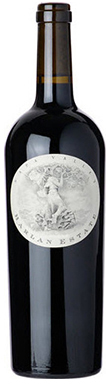
By the 2001 vintage, the vines at Harlan Estate were entering their 17th year of life and adapting to the method of dry farming that Bob Levy was working on. Average winter rains, a warm May and June, preceded a cool July when temperatures picked up, but by September, they’d fallen into the upper 21°Cs for almost three weeks. Harvest had begun and then stopped to allow for more ripening, and was eventually finished by 4 October. Yields were a paltry 1.5 acres per ton (around 26.25hl/ha). At 22 years it was pure, exotic, contemplative, heady, and expressive. Everything is in balance. A tightly knit Cabernet Sauvignon with rich black currant and blackberry fruits, beautifully turned and loamy soil, gorgeous expressions of garrigue and mint, plump yet firm tannins, and a forever finish. A marvel of wine, in its prime drinking window, but ready to wow over the next two or three decades.
2001
Harlan EstateNapa Valley
Harlan Estate, Napa Valley, California, USA, 1994
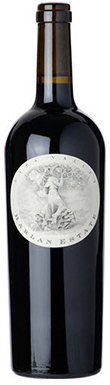
Only the fourth official release from Harlan, the vintage was mild with average winter rainfall and cool days with temperatures averaging just below 26°C. Budbreak was in mid-April, showers in May, and the temperatures ticked up in August and September. The harvest was completed by 23 October 1994. The most delicate of the Decanter Fine Wine Encounter New York masterclass lineup, with a light to medium body, dried red currants, a panoply of dried tobacco, sandalwood, and a beautiful minty lift. Full of vitality, with grip and a delectable finish. To be enjoyed now and over the next 10-15 years or longer.
1994
Harlan EstateNapa Valley
Harlan Estate, Napa Valley, California, USA, 1992
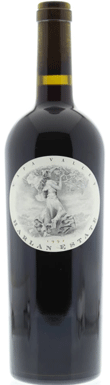
An intriguing, understated nose introduces a markedly more high-toned and leafy iteration, produced from vines just eight years of age. The palate is mature, taught and earthy, and continues to evolve in the glass. As with other aged showings of Harlan's top cuvée, its profile is more Right Bank than Left Bank Bordeaux. A fascinating early vintage from this seminal property.
1992
Harlan EstateNapa Valley
