
Treating Malbec ‘like Pinot Noir’: The new terroir approach


How good can it be? Argentina’s top winemakers are pushing the country’s headline grape to its limits in their quest to achieve the best possible quality and character. Patricio Tapia reports...
When Sebastian Zuccardi, winemaker at Bodega Familia Zuccardi, first saw the landscape, and the site they had chosen for the vineyard, he calculated with some concern that at least 300 trucks would be needed to remove all the stones before planting.
Scroll down for Tapia’s top terroir-focused Malbecs from Uco Valley
It was the summer of 2007 and the Zuccardi family, today one of the most important forces in South American wine, was about to embark upon the most ambitious adventure of its history. The vineyard, still unnamed, would surround a winery, a construction that would be made only of stones and concrete, a building that could be confused with the desert landscape of thorns and rocks, of huge mountains asymmetrically cutting the horizon.
The initial calculation was wrong. It took a thousand trucks to remove all those stones.
As a good example of the slightly dark sense of Argentine humour, and taking into account the thousand trucks, the vineyard was baptised Piedra Infinita (infinite stone) and is located in the area of Altamira, about 1,400m above sea level, at the foot of the Andes mountains. It is not a new place for viticulture. In fact, it was in this area that the first vines in the Uco Valley were planted, towards the beginning of the 20th century. However, the exact location chosen by the Zuccardis had never previously been planted.
‘The site was not planted, because it’s on a slope and irrigation becomes complicated– and also because there are so many stones,’ says Sebastián Zuccardi.
Piedra Infinita has 36ha of vines, of which 27ha are Malbec. It’s hard to see the appeal, surveying it while Zuccardi talks about the special attention needed here, and the way in which they had to design the vineyard to accommodate the challenging topography.
What we see is an arid and cold surface, interrupted by vines that could be described as ‘scrawny’, small trunks in the middle of a landscape of equally scrawny vegetation, doing their best to survive on the little water that trickles down from the Andes.
Zuccardi has been experimenting with these vines since they first bore fruit, in 2009. First, in a corner of the company’s Maipú winery, in an area full of containers of all sizes, materials and shapes that they called, not without certain ambition, the ‘research and development department’. And then in the winery that today stands in the middle of the Altamira vineyards, and that was inaugurated in 2013. Stone and cement. Imposing, but at the same time tailored to the needs of the Zuccardi family in this location.
Mountain view
But let’s look at things from a distance. If you walk a few metres to the west, you can find yourself in the middle of the vineyards. The winery and its cement walls begin to emerge, as does the Andes mountain range, a wall of rock in the distance. Now everything looks calm, but in truth nothing is.
Albeit imperceptibly, the mountain continues to move, gradually eroding its skirts, transporting the rocks, sands and chalk with the waters that descend from the summits, as it has done for thousands of years. It is not strange to think, then, that the soils derived from those skirts are anything but homogeneous, thanks to this chaotic yet noiseless avalanche of Andean material.
No doubt Sebastián Zuccardi, facing this piece of virgin land in that summer of 2007, thought not only of the many trucks required, but also of the diverse wine styles that these soils could give him.
Fast-forward, and we know that these 27ha of Malbec gave him a wine, a Malbec that is now known as Piedra Infinita, and which is an expression of that diverse territory. ‘Piedra Infinita is made with about 20 wines that come from 20 different areas,’ he says. ‘We blend all that in a single Malbec.’
But sometimes, there are individual wines among those 20 that stand out for their differences. This is the case, for example, with the notable but minimal productions (600 bottles each) of Gravascal and Supercal, and also the Concreto Malbec, of which about 12,000 bottles are produced. ‘In that wine we look for something extreme. It comes from a sector of the vineyard that has almost no soil– it’s just chalk and stone,’ adds Zuccardi.
Concreto is a good example of the current house style. Born in chalk, it has that vertical texture that clings to the palate and its fruity flavours are fresh and tense. ‘We avoid the fat, the sweetness – that’s why we harvest early and don’t use wood. We don’t want anything that sweetens,’ he says.
Self-schooled
This Malbec shows just one aspect of the Zuccardi Piedra Infinita vineyard, and illustrates the diversity of today’s micro-terroirs in Argentina – something that was not well understood by the country’s producers even a short time ago. Or at least that is the experience Alejandro Sejanovich, today a founding partner at Tinto Negro, had in his early years as a winemaker.
Towards the beginning of the 1990s, Sejanovich worked for Catena. ‘In those years it was all about looking for a homogeneity of soils and vineyards,’ he says. ‘A single type of soil planted, in the best case, with a grape of only one clone that gave a consistent production. The old Malbec vineyards, with the diversity of decades of massale selections, were badly thought-of.’
This common approach caused Sejanovich some disquiet, and he decided to challenge the accepted view. The first opportunity came in 1994, with a vineyard planted in Altamira. There he began to make different vinifications according to the types of soil he found there.
He soon realised that the differences were remarkable, and as soon as he had the opportunity to buy a vineyard, the place he chose was Altamira, an area with a special richness of soils.
Finca La Escuela is so named because there is a small rural school next to the vineyard. Sejanovich planted the vineyard in 2000 and the first wine to be made was simply called Finca La Escuela, his interpretation of the rich diversity of soils present in these 7.5ha of vineyards. But then it went further.
‘We had been researching the different soils of La Escuela since we bought the vineyard, and in 2012 we started bottling their wines separately.’ Sejanovich explains how the four wines that make up the range differ. The Finca La Escuela La Piedra example, gives a wine of great concentration and strength in a soil rich in stones and poor in fertility, while Finca La Escuela El Limo has a riper profile, and better preserves acidity in a soil with better water retention.
Singular character
A similar journey was made by Alejandro Vigil, chief winemaker at Bodega Catena Zapata, this time with the Adrianna vineyard, at about1,500m in the heights of Gualtallary in the Uco Valley. Adrianna was planted in 1994, and at the time was a huge gamble. In those days the area was considered too high and too cold for Malbec grapes to fully mature. Time would prove otherwise.
Vigil joined Catena in 2002. His previous job had been related to soils at INTA (National Institute of Agricultural Technology), so one of the first things that caught his attention was the richness of Adrianna.
‘One of the things that surprised me most was that, for example, between a sector rich in chalk and one rich in sand, there was more than a month’s difference in the harvest dates,’ Vigil recalls.
The first harvest from Adrianna was in 2004, and the wine was one of a line of single-vineyard bottlings from different areas of Mendoza. But Vigil knew that this was only the first step and that his search was for a greater specificity, especially after a first and very revealing trip to Burgundy, in 2005.
‘After that, I began to try to see Malbec as Pinot Noir, starting with the clear way in which it shows the soil where it comes from – but also in terms of oenology, treating it more delicately when extracting flavours and also using whole clusters, including stems. ’Vigil recalls that a producer in Burgundy told him he had begun to add the stems to improve the structure; without it, the wine had a flabby structure – a common issue also with Malbec, a grape not characterised by having a great tannic backbone. At the same time, Vigil realised that the more calcareous soils bolstered this structure, offering sharper tannins, and more grip in the mouth.
‘Also related to the structure, we discovered that the harvest date was crucial. If we harvested too early, or too late, it directly affected the skeleton of the Malbec. Contrary to common perception, the window of harvest for this grape, at least in high-altitude vineyards, is very small.’
After years of studying the soil and experimenting with Malbec, in 2013 Vigil decided to bottle the wines of the three soils that seemed to bring the most personality to the wines. For Adrianna Vineyard Fortuna Terrae, a deep soil of lime and sand of about80cm ends on a base of chalk. The Adrianna Vineyard Mundus Bacillus Terrae, meanwhile, comes from a specific sector where the soil’s micro-organisms have a special symbiosis with the roots, allowing for a better absorption of minerals. And Adrianna Vineyard River Stones is the most stony sector of the property and has almost no soil.
For Vigil, there are tangible differences between the three wines. If Fortuna is a wine marked by acidity ‘almost as if it were a Champagne base wine’, Mundus Bacillus Terrae offers a vertical wine with great balance, but always towards the side of acidity. River Stones has the most mature profile of the three, where for the first-time black fruits appear along with red fruits. While the other two have 50% stems during vinification, River Stones has 100% to help give structure – solid bones to sustain that maturity.
These are small-production wines, about 3,000 bottles each, with each one raised in barrels and foudres for a minimum of 18months. Since the three sectors of the vineyard were the basis for the original Adrianna Vineyard Malbec bottling, with the emergence of these three single plots the Adrianna was discontinued from the market as of 2013. ‘During the last 15 years, we have been vinifying separately around 16 types of different soils in different areas of the Uco Valley, but only these three have consistently given me very good results,’ Vigil emphasises.
Right place, right time
Just a decade and a half ago, Argentina was still amazed by the Malbec variety and the success it was having in export markets around the world. The excitement was such that few producers took the time to investigate the real potential of the grape, beyond its undeniable commercial qualities: delicious aromas and a smooth, creamy texture. It was Malbec itself that was spoken about, rather than production zones where it was grown.
However, in recent years, the concept of regionality, of a sense of place in relation to Malbec, began to be heard in conversations between winemakers. These new micro-terroirs are the next and logical step on the journey to understanding the true depths of Argentinian Malbec.
Patricio Tapia is author of the Descorchados guide to the wines of South America, and a regular Decanter contributor.
See Tapia’s top terroir-focused Malbecs from Uco Valley
You might also like:
12 exciting Argentinian wines under £25
Seven rising stars of Argentinian winemaking
Expert’s Choice: Argentinian Cabernet
Zuccardi, Piedra Infinita Gravascal, Uco Valley, Altamira, Mendoza, Argentina, 2015
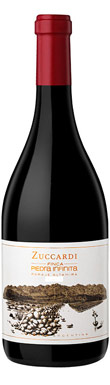

Gravascal is Zuccardi’s new single plot and is a selection from sectors of gravel covered with chalk. The depth is the first thing that impresses...
2015
ZuccardiUco Valley

Zuccardi, Piedra Infinita, Uco Valley, Altamira, Mendoza, Argentina, 2015
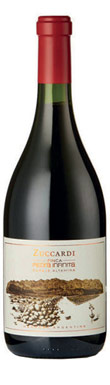
A selection of plants on soils rich in chalk, and a snapshot of Altamira with its firm, austere tannins, generous background of ripe red fruits...
2015
ZuccardiUco Valley
TintoNegro, Finca La Escuela La Grava Malbec, Uco Valley, Altamira, Mendoza, Argentina, 2015
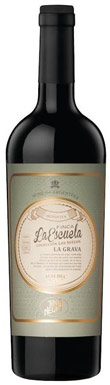
A selection of rows of vines on alluvial soils rich in gravel. It has an imposing body, full of firm tannins, surrounded by ripe red...
2015
TintoNegroUco Valley
Zuccardi, Concreto, Uco Valley, Altamira, Mendoza, Argentina, 2016
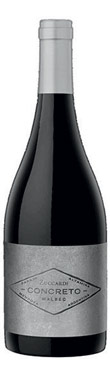
From the less fertile sector of the Piedra Infinita vineyard,this has a delightful core of red fruits, surrounded by firm yet elegant tannins and refreshing...
2016
ZuccardiUco Valley
Catena Zapata, Adrianna Vineyard Mundus Bacillus Terrae Malbec, Uco Valley, Gualtallary, Mendoza, Argentina, 2014
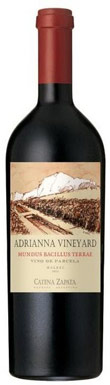
At above 1,500m, the diversity of the Adrianna vineyard offers different types of soils. This wine comes from deep soils with a base of lime....
2014
Catena ZapataUco Valley
Catena Zapata, Adrianna Vineyard Fortuna Terrae Malbec, Uco Valley, Gualtallary, Mendoza, Argentina, 2014
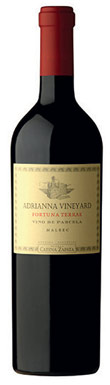
From the chalkiest soils of the high Adrianna vineyard, this seems to have been made of stones rather than grapes. An intense minerality is accompanied...
2014
Catena ZapataUco Valley
TintoNegro, Finca La Escuela Malbec, Uco Valley, Altamira, Mendoza, Argentina, 2015
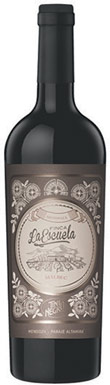
This Finca La Escuela bottling is a summary of the soil diversity of this vineyard in Altamira. A mixture of different sectors, from lime-rich to...
2015
TintoNegroUco Valley
